
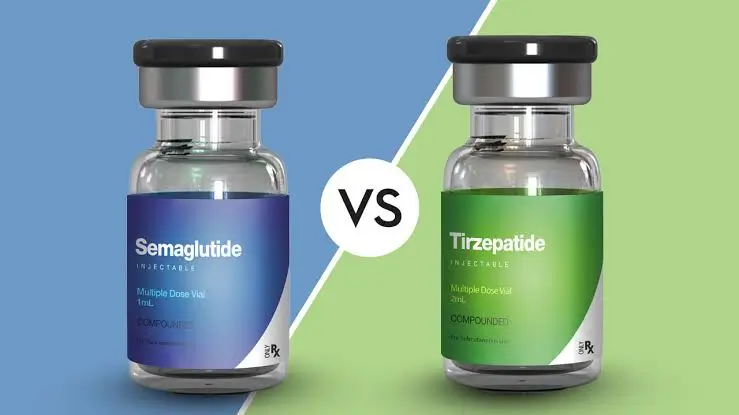
Most people who walk into our Oklahoma clinics asking about weight loss injections have already done some reading. They know the names. What they want to know is which one they should actually be on, and why the answer online always seems to be “ask your doctor.” So here it is, the way we’d explain it across the desk.
The short answer: tirzepatide usually wins on weight loss, but it isn’t right for everyone
In the only trial that put the two head to head, tirzepatide (Zepbound, Mounjaro) produced an average 20.2% loss of body weight over 72 weeks. Semaglutide (Wegovy, Ozempic) produced 13.7%. That’s a real gap, and for a lot of patients it settles the question. But not for all of them. Insurance often covers one and not the other. Some people have heart disease, where semaglutide’s evidence is stronger. Some would rather take a pill. And some simply can’t stretch to the higher self-pay price every month. The drug that looks best on paper is only the right drug if you can stay on it, afford it, and tolerate it. Everything below is about working that out.
What’s actually different between tirzepatide and semaglutide?
Both are once-weekly injections that copy hormones your gut releases after a meal. The difference is how many hormones they copy.
Semaglutide works on one hormone (GLP-1)
Semaglutide is a GLP-1 receptor agonist. It mimics glucagon-like peptide-1, which tells your brain you’re full, slows how quickly your stomach empties, and helps steady blood sugar. You’ll see it sold as Wegovy for weight management and Ozempic for type 2 diabetes. There’s now a once-daily Wegovy tablet as well, for people who don’t want to inject.
Tirzepatide works on two (GIP and GLP-1)
Tirzepatide does everything semaglutide does, then adds a second receptor: GIP, or glucose-dependent insulinotropic polypeptide. GIP seems to strengthen the appetite effect and may improve how your body handles fat and insulin. It’s sold as Zepbound for weight management and obstructive sleep apnea, and as Mounjaro for type 2 diabetes. That second hormone is why tirzepatide tends to produce more weight loss. It isn’t a bigger dose of the same thing. It’s a second mechanism running alongside the first. Whether that shows up in real people is a fair question, and it’s been tested.
| Semaglutide | Tirzepatide | |
| Brand names | Wegovy, Ozempic | Zepbound, Mounjaro |
| How it works | GLP-1 receptor agonist | Dual GIP and GLP-1 receptor agonist |
| Average weight loss (SURMOUNT-5, 72 weeks) | 13.7% | 20.2% |
| Weekly dose range | 0.25 mg to 2.4 mg | 2.5 mg to 15 mg |
| Forms | Weekly injection, daily tablet | Weekly injection (pen or vial) |
| Other approved uses | Type 2 diabetes, heart risk reduction | Type 2 diabetes, obstructive sleep apnea |
Which one produces more weight loss?
Tirzepatide, and it isn’t close in the trial data. SURMOUNT-5, published in 2025, followed 750 adults with obesity (no diabetes) for 72 weeks. Half took tirzepatide at 10 or 15 mg. The other half took semaglutide at 1.7 or 2.4 mg. By the end, the tirzepatide group had lost 20.2% of their body weight, about 50 lb on average. The semaglutide group lost 13.7%, about 33 lb. Almost two-thirds of the tirzepatide patients lost 15% or more; around 40% of semaglutide patients did. One in three on tirzepatide lost a quarter of their body weight. On semaglutide it was one in six. Put that on a 220 lb person and you’re looking at roughly 44 lb versus 30 lb over a year and a half. Both numbers would have been unthinkable from a medication ten years ago. Semaglutide only looks modest because it’s standing next to tirzepatide. Averages also hide a wide spread. We’ve had semaglutide patients lose 25% and tirzepatide patients stall at 10%. The medication sets the ceiling. Dose, consistency, and what you do in the kitchen decide where you land under it. What we see in practice. [Provider voice — confirm before publishing.] The research pattern holds up in our clinics more often than not. Someone who plateaus on semaglutide and moves to tirzepatide usually sees the scale start moving again within a couple of months. Still, the strongest predictor of results we see isn’t which drug a patient is on. It’s whether they get to an effective dose and keep showing up for follow-ups. None of that matters if you can’t stay on the medication, though. Which is where side effects come in.
Side effects: is one easier to tolerate?
Not really. They share the same list, at similar rates, because they work in similar ways. Nausea is the big one, then constipation, diarrhea, feeling full to the point of forgetting to eat, tiredness, and a bit of redness at the injection site. All of it is worst in the week after a dose increase and usually eases within days. Both drugs slow your stomach down; some queasiness is the mechanism doing its job, not a sign it’s gone wrong. Where they differ is subtle. In SURMOUNT-5, serious adverse events were slightly more common with tirzepatide (4.8% against 3.5%), a small gap that came alongside a lot more weight loss. Patients tell us both things: that tirzepatide felt gentler at the same stage, and that it felt rougher. It’s individual and we can’t predict it in advance. One thing that does help is that tirzepatide has six dose steps between 2.5 mg and 15 mg, which gives a provider more room to slow the ramp-up if your stomach objects. Who should avoid both. Anyone with a personal or family history of medullary thyroid carcinoma or MEN2 (both drugs carry the same boxed warning), anyone who’s had pancreatitis, anyone pregnant or trying, and anyone with a serious stomach condition like gastroparesis. People with type 1 diabetes or on insulin need closer monitoring. At TeamCareLLC, a history review and baseline labs come before either prescription, every time. If you’re not sure you’d be eligible, we’ve written up who qualifies for medical weight loss separately. Tolerability is one half of “can I stay on this.” Cost is the other, and it’s usually the bigger half.
Cost and access in 2026: what patients actually pay
For a lot of patients, this is the section that decides it. Paying out of pocket. As of September 2026 (prices move, so check), the manufacturers’ direct programs are the cheapest way to buy the branded drugs without insurance. Zepbound single-dose vials through LillyDirect start around $299 a month at the lower doses and climb to roughly $399 to $449 at higher maintenance doses. Wegovy through NovoCare runs from about $199 to $399 depending on dose, and the Wegovy tablet sits near $149. Walk into a pharmacy without a program and the list price is often over $1,000 a month, which is why those direct programs matter so much. The medication is only part of what you’ll pay, so it’s worth seeing what our weight loss program costs in Oklahoma City before comparing drug prices in isolation. Insurance and Medicare. Coverage often settles the choice on its own. Plenty of employer plans cover one drug and not the other, and nearly all want prior authorization with a documented BMI and related conditions. Since July 2026, Medicare’s GLP-1 Bridge program has offered a flat $50 monthly copay for eligible Part D members who meet the clinical criteria, though only on specific pen formulations. Our rule of thumb is blunt: if your plan covers semaglutide at a $25 copay and won’t touch tirzepatide, semaglutide is the right answer for almost everyone. Compounded versions. For about two years, compounded tirzepatide and semaglutide were everywhere, because both brand drugs were on the FDA’s shortage list. That ended. The FDA declared the tirzepatide shortage over in December 2024 and semaglutide’s in February 2025, and the leeway that allowed large-scale compounding was withdrawn during 2025. Compounding still exists. Licensed 503A and 503B pharmacies can prepare a medication for an individual patient when there’s a clinical reason to. But a cheap “GLP-1” from a website with no prescriber behind it is a far riskier buy than it was, and we’ve seen the results of that in clinic. [Confirm before publishing:] At TeamCareLLC we prescribe [FDA-approved Zepbound and Wegovy / compounded medication from a state-licensed 503A pharmacy / both, depending on your situation]. Whichever route you take, ask three questions: which pharmacy is filling it, is it licensed in your state, and who is watching your dose. The same questions apply when you’re choosing a medical weight loss clinic, whichever one you end up with.
Which one is right for you? A simple way to decide
Once results, side effects, and cost are on the table, the decision is usually clearer than people expect. Lean toward tirzepatide if:
- You have a lot of weight to lose, or a goal that semaglutide’s 13% to 15% average probably won’t reach. This is often the case for patients looking at it as a non-surgical alternative to weight loss surgery.
- You’ve plateaued on semaglutide at the highest dose you can tolerate.
- You have obstructive sleep apnea. Zepbound is specifically approved for it.
- You have type 2 diabetes and need stronger blood sugar control alongside weight loss.
- Your insurance covers it, or $300 to $450 a month self-pay is workable.
If most of those apply, start with our tirzepatide weight loss program in Oklahoma City. Lean toward semaglutide if:
- You have established heart disease. The SELECT trial showed semaglutide cut major cardiovascular events by about 20% in people with overweight or obesity and existing heart disease. Tirzepatide’s heart data is building, but semaglutide’s has been around longer.
- You’d rather take a daily pill than a weekly injection.
- Your insurance covers semaglutide and not tirzepatide.
- You want the drug with the longest track record and the most real-world safety data behind it.
- You’d prefer a gentler, cheaper start and the option to step up later.
If that list sounds more like you, our semaglutide weight loss program in Oklahoma City is the place to look. And then there’s the part that matters more than either drug name. Getting to an effective dose (a surprising number of people sit on a starter dose for months). Keeping follow-up appointments, which is most of what our weight loss coaching exists for. Eating enough protein and doing some resistance work so the weight you lose isn’t muscle, something our nutrition counseling sessions spend a lot of time on. Having a maintenance plan before you hit your goal, not after. The semaglutide patient who shows up every month does better than the tirzepatide patient who doesn’t. We see it constantly.
Already on semaglutide? What switching to tirzepatide involves
This is probably the single most common question we get from existing patients, and the answer is that switching is routine when it’s supervised. The usual reasons are a plateau of two or three months at your maximum tolerated dose, side effects that never settled, a change in coverage or cost, or a new diagnosis like sleep apnea. Here’s how we handle it:
- Take your final semaglutide dose as normal. No washout is needed. Your next weekly injection is simply tirzepatide.
- Start tirzepatide low, usually 2.5 or 5 mg, rather than trying to match your old dose. The second hormone needs its own ramp-up.
- Increase every four weeks as tolerated, the same way you did the first time.
- Check in on side effects and weight at each step, and adjust.
Expect a short lull in weight loss while the new medication builds up. It usually picks back up within a few weeks.
How TeamCareLLC helps you choose (and stay on track)
We prescribe both within our medical weight loss program in Oklahoma City, so there’s no reason for us to steer you toward one. A first visit covers your history, your goals, your labs, and an honest conversation about what your insurance and budget will support. After that, our providers manage dose increases month by month and adjust when something isn’t working, including switching medications when that’s the right call. If you’re leaning toward the stronger option, start with tirzepatide. If a pill, heart protection, or coverage points you the other way, semaglutide may be the better fit. Either way, book a consultation and we’ll work it out together.
Frequently asked questions
Is tirzepatide better than semaglutide for weight loss? For average weight loss, yes. In the SURMOUNT-5 trial, tirzepatide produced 20.2% body weight loss over 72 weeks compared with 13.7% for semaglutide. Semaglutide still delivers substantial results and has stronger long-term heart evidence, so “better” depends on your goals and health history. Can I switch from semaglutide to tirzepatide? Yes. There’s no washout period. You start tirzepatide at a low dose the week after your last semaglutide injection and increase every four weeks. Most people switch because of a plateau, side effects, or a change in insurance coverage. Which has fewer side effects, tirzepatide or semaglutide? Neither has a clear edge. Both cause nausea, constipation, and diarrhea at similar rates, mostly around dose increases. Serious side effects were slightly more common with tirzepatide in the head-to-head trial, but the difference was small. Which is cheaper without insurance in 2026? Semaglutide, in most cases. Wegovy through NovoCare starts around $199 a month and the Wegovy tablet is about $149, while Zepbound vials through LillyDirect start around $299 and rise to $449 at higher doses. Prices change, so check current program pricing before deciding. Is compounded tirzepatide or semaglutide still available in Oklahoma? In a limited way. The FDA shortages ended in 2024 and 2025, so large-scale compounding is no longer permitted. Licensed pharmacies can still compound for an individual patient with a clinical need. Ask your provider which pharmacy fills the prescription and whether it’s licensed in Oklahoma. Will I regain weight if I stop either medication? Some regain is common with both. Studies show people who stop typically regain a meaningful share of the weight within a year, which is why we build a maintenance plan and, where appropriate, taper the dose rather than stopping cold.