
Ask someone what tirzepatide does and you’ll usually hear “it makes you not hungry.” That’s true, and it’s also about a fifth of the story. The more useful question is why this drug produces bigger numbers than the medications that came before it and the answer sits in one design decision made years before anyone was calling it Zepbound.
How tirzepatide works, in short
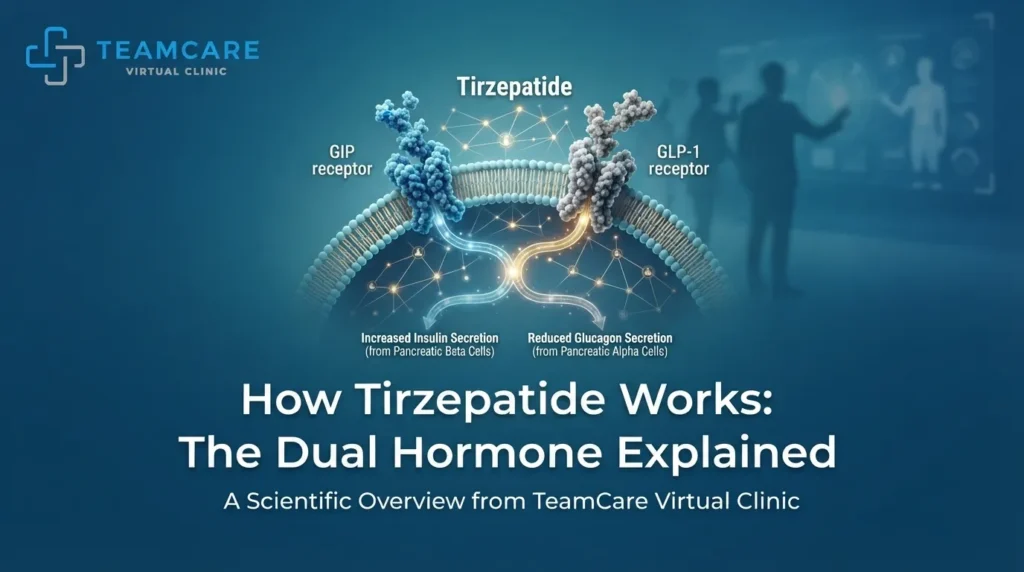
Tirzepatide copies two gut hormones at once: GIP and GLP-1. Older medications in this class copy only GLP-1. Working on both receptors slows how fast your stomach empties, quiets appetite signaling in the brain, and improves how the body handles glucose and stored fat. The result is that people eat less without white-knuckling it, and lose more weight than single-hormone drugs produce.
That dual action is the whole reason tirzepatide behaves differently from the medications it’s usually compared against.
The two hormones, and why two beats one
Your gut releases hormones every time you eat. They tell your pancreas to release insulin, tell your stomach to slow down, and tell your brain you’ve had enough. In obesity, that signaling is often blunted. Tirzepatide restores it artificially, from two directions.
GLP-1: the appetite signal
Glucagon-like peptide-1 is the one most people have heard of. It slows gastric emptying, prompts glucose-dependent insulin release, and acts directly on appetite centers in the hypothalamus. This is the hormone doing most of the visible work — the reduced hunger, the smaller portions, the food thoughts going quiet.
GIP: the metabolic one
Glucose-dependent insulinotropic polypeptide is less familiar and, until recently, was considered a dead end for weight loss. It turns out to matter. GIP appears to improve how fat tissue takes up and stores energy, sharpens insulin sensitivity, and — this part is interesting — may act on the brainstem in a way that dampens nausea rather than causing it.
Which is why the combination works better than the sum of its parts. You get stronger appetite suppression from the GLP-1 side, while the GIP side buffers some of the side effects that would otherwise limit how high a dose you could tolerate.
What tirzepatide actually changes in your body
Four things, running at the same time.
Your stomach empties more slowly. Food sits longer, so fullness arrives sooner and lasts. This is also why large or fatty meals become genuinely unpleasant on a therapeutic dose — the stomach can’t clear them at the old pace.
Appetite signaling in the brain changes. Patients describe this more consistently than anything else: the constant background negotiation about food stops. Not willpower, not discipline. The signal just isn’t there in the same volume.
Insulin release improves, and glucagon drops. Both effects are glucose-dependent, meaning they scale with your blood sugar rather than firing regardless. That’s why tirzepatide rarely causes hypoglycemia on its own, though the picture changes if you’re also taking insulin or a sulfonylurea.
Fat handling shifts. The GIP contribution appears to change how adipose tissue stores and releases energy, which is part of why the weight loss on tirzepatide skews toward fat rather than fluid.
None of this happens on day one, and that’s the part people are least prepared for.
How fast it works, and why the dose climbs so slowly
Most people notice reduced appetite within the first week or two. The drug has a half-life of roughly five days, so it takes about a month to reach steady levels in your system after each dose change.
The starting dose is 2.5 mg weekly, and it’s not a treatment dose — it’s an adjustment dose. From there you step up roughly every four weeks: 5 mg, 7.5 mg, and onward toward a ceiling of 15 mg, stopping wherever the balance between results and side effects lands for you. Reaching a full maintenance dose takes four to five months.
That slow climb exists for one reason. Escalating faster produces nausea, vomiting and reflux severe enough that people quit, and a medication you’ve abandoned works about as well as one you never started. The trade-off is that months one and two look disappointing on the scale. This is normal, it’s expected, and it’s the point at which most people give up too early. If you’re unsure what the first months should look like, it’s covered in what to expect at a first weight loss appointment.
How much weight people actually lose
SURMOUNT-1 followed 2,539 adults with obesity, without diabetes, for 72 weeks. Average weight reduction came out at 15.0% on 5 mg, 19.5% on 10 mg, and 20.9% on 15 mg. Placebo managed 3.1%.
For a 250-pound starting weight, the top dose translates to roughly 52 pounds over about 17 months.
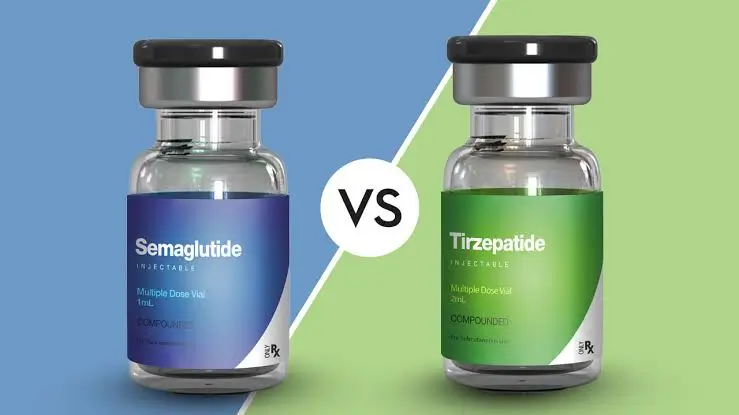
Those are averages, though, and the spread around them is wide. Some people lose considerably more; a minority respond poorly at any dose. Sleep, alcohol, thyroid function, other medications and genetics all move the number, and none of it is predictable in advance. If you’re weighing this against the alternative, tirzepatide and semaglutide compared head to head is the more direct answer.
What tirzepatide doesn’t do
It doesn’t work indefinitely at a fixed dose. Most people plateau somewhere between months nine and eighteen as the body adapts — that’s physiology, not failure, and it’s usually managed with a dose adjustment or a change to the surrounding plan.
It doesn’t distinguish between fat and muscle. A meaningful share of weight lost on any GLP-1 medication comes from lean mass unless you actively protect it. Adequate protein and resistance training aren’t optional extras here; they’re the difference between losing weight and losing the metabolic capacity to keep it off. This is where nutrition support does more work than most people expect.
And it doesn’t cure anything. Stop the medication and appetite signaling returns to where it started, which is why regain is common. Tirzepatide treats an ongoing condition in the same way blood pressure medication does — while you’re taking it.
Where the mechanism stops and the plan starts
Understanding how the drug works matters, but it only accounts for part of the outcome. Dose, timing, protein intake, training, sleep and how the plateau gets handled account for the rest.
That’s the part we build with you at TeamCare — screening first, then a dose plan and the support around it. If you’d like to talk it through, get in touch and we’ll start with whether it’s the right fit at all.
FAQs
How does tirzepatide work for weight loss?
It activates the GIP and GLP-1 receptors at once, slowing stomach emptying, reducing appetite signaling in the brain, and improving how the body handles glucose and stored fat. Most people eat less without consciously restricting.
How long does tirzepatide take to work?
Appetite usually drops within one to two weeks. Meaningful weight loss typically begins around months three to five, once you’ve climbed to a therapeutic dose.
Is tirzepatide the same as Ozempic?
No. Ozempic is semaglutide and works on GLP-1 alone. Tirzepatide works on GIP and GLP-1, and is sold as Zepbound for weight management and Mounjaro for type 2 diabetes.
Does tirzepatide burn fat directly?
Not exactly. It creates a sustained calorie deficit by changing appetite and digestion, and the GIP effect appears to shift energy toward fat stores rather than lean tissue.
Do I have to take the highest dose?
No. Plenty of people do well at 5 mg or 7.5 mg. The right dose is the lowest one that gives you steady progress you can tolerate.
Who shouldn’t take tirzepatide?
Anyone with a personal or family history of medullary thyroid carcinoma or MEN2, anyone pregnant or trying to conceive, and with caution in pancreatitis or gallbladder disease. Eligibility also depends on BMI and related health conditions.